


Back Awareness Week: Spotting the Sneaky Spondylolisthesis
11 October 2025
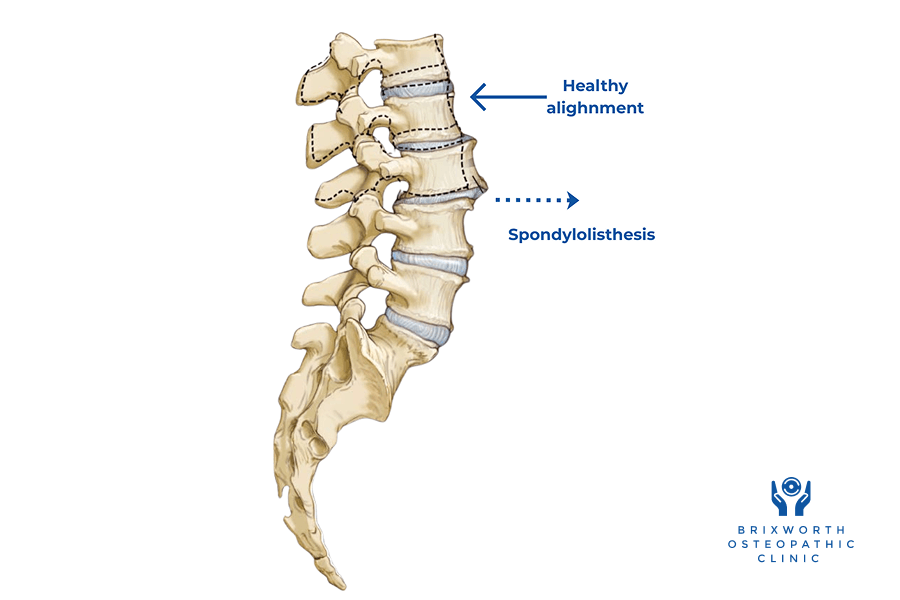
It’s Back Awareness Week, and I’ve been reflecting on some of the fascinating cases we’ve seen in the clinic recently. Many of our patients have been coming in with lower back pain - something we see all the time, but what’s been interesting is why they’ve been getting it.
We’re seeing people who spend a lot of time sitting, whether that’s working long hours at a desk, slumped on the sofa, or sitting in one position while playing the guitar. We’re also seeing older patients whose posture and mobility have changed over the years.
Often, people assume their discomfort is “typical” lower back pain, which in most cases it is, but in a small number of cases, we’ve been finding variations of a sneaky culprit: Spondylolisthesis.
Now, I love an unusual case and a bit of a challenge! These are the ones that can make my job interesting. Instead of the pain coming from the usual repetitive or postural causes, Spondylolisthesis affects how the structures in and around the spine behave and that changes how we treat it.
So, what is it?
Spondylolisthesis is a condition where one of the vertebrae (the bones in your spine) has moved forward out of alignment. This may cause compression on the surrounding nerves and joints, leading to discomfort, irritation, tightness around the pelvis, and even shooting pains down the leg.
What’s fascinating is that the symptoms can mimic ordinary lower back pain, which is why it’s so important to look deeper. When we identify it, the way we work changes - we help the body re-align, ease the tension, and restore proper movement to the area.
It’s incredibly rewarding when a patient comes back saying they feel so much better and their spine is moving as it should again.
“I came into Brixworth Osteopathic clinic with pain in my bum and shooting into my thigh. After my assessment, I was advised this was Spondylolisthesis, something that I wasn’t aware of. It has been really interesting to learn about and how I can help myself”
— Alice, Northampton
Many people with Spondylolisthesis are told that surgery is their only option - often involving fusing vertebrae together. While that can be necessary in severe cases, it can also lead to other complications. In many cases, we’ve been able to help patients manage their symptoms without surgery through careful osteopathic treatment and ongoing self-care.
Of course, it does take maintenance and commitment from the patient, but being able to move freely and comfortably again is worth it.